The EU is running out of patience with its economic relationship with China. France and Germany want Brussels to move faster against market-distorting imports, the European Parliament is calling for a tougher and more strategic China policy, and the Commission is pressing Beijing for concrete concessions accordingly. The question is no longer whether Europe should respond, but how far it is prepared to go – and whether Member States can agree on the tools to do it.
France and Germany have put the clearest proposal on the table. In a joint paper, President Emmanuel Macron and Chancellor Friedrich Merz called for faster and more effective use of existing trade-defence instruments, including more investigations and measures covering entire sectors. They also want new tools to respond to countries that distort competition or create dangerous dependencies.
One proposal would allow the Commission to activate countermeasures unless a qualified majority of Member States – 55 per cent of countries, holding 65 per cent of the total EU population – voted to block them. That would make it harder for individual governments to slow down action and could allow Brussels to respond within days rather than months.
Paris and Berlin also want measures to address imports in sectors including chemicals and hybrid vehicles, where European industries are facing growing Chinese competition. The proposal is deliberately not aimed at China alone, but the targets are hard to miss.
The two countries do not agree on everything. France has long favoured a more assertive approach to China, while Germany has traditionally been more cautious because of its companies' exposure to the Chinese market. The significance of the paper is therefore less that Paris and Berlin have suddenly agreed on every detail than that Germany is now putting its name behind a tougher European response.
That shift is visible in Berlin, too. A new German Bundestag China Commission report describes economic dependencies on China as a potential security risk, highlighting critical raw materials, supply chains, market distortions and Chinese technological advantages in strategic sectors. It calls for closer coordination between trade, industrial, security and research policies and for more effective countervailing measures.
The European Parliament is moving in the same direction. Its latest recommendation describes China as still a partner on global issues, but increasingly a systemic rival and economic and security competitor. It calls for the EU to reduce strategic dependencies, build leverage, coordinate with allies and be prepared to respond to Chinese economic coercion.
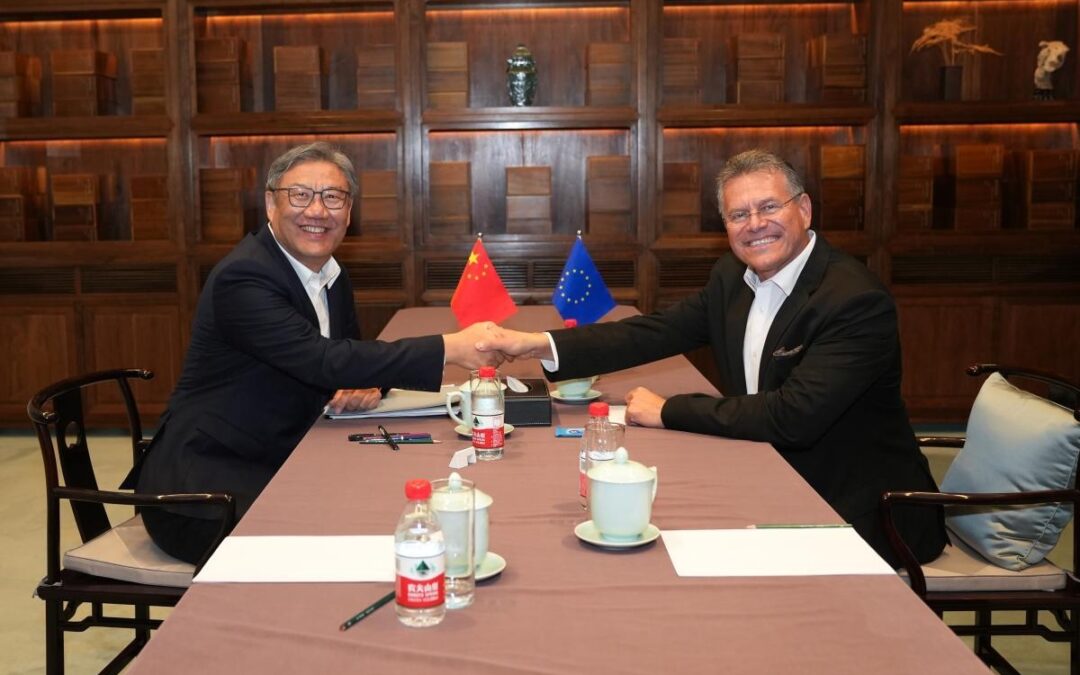
The Commission, meanwhile, is testing whether pressure can produce results before reaching for its biggest weapons. Trade Commissioner Maroš Šefčovič is seeking a “proof of concept” from talks with Beijing covering Chinese export surges, greater European access to the Chinese market and long-term clarity over restrictions on rare earths. Hybrid vehicles are at the centre of the negotiations.
This creates an unusual moment. France and Germany are asking for a bigger European toolbox; Parliament is demanding greater strategic leverage; and the Commission is trying to make its existing toolbox work.
Europe may therefore be closer to a common China policy than it has been for years. But agreeing that the problem is urgent is easier than agreeing on how to confront it. The next test will be whether EU leaders are willing to turn growing political consensus into concrete action.